
Whose Blood?
On Christian Nationalism 4. What to Say at a Time of Scapegoating

I. A Moment That Requires Speech
Every Sunday thousands of congregations across this country are saying together with their priests and bishops words older than the republic, words older than the nation’s founding myths, words older than every story America likes to tell about itself. This is my body. This is my blood. And when the gathered people respond, when they too say, this is my body. This is my blood. They’re not just stating a theological proposition. They are performing an act of political imagination more radical than anything available in the current public square. Look at them. Draw close to them. Their bodies assembled around a common table are declaring that the only blood that constitutes their truest belonging is covenant blood poured out for the world. For every nation. For every tribe. For every tongue. For every people.
It bears pause because the culture around that gathering is telling a very different story about blood right now.
The language has been moving. And people who pay attention to how democracies fail will notice that when this kind of language moves, violence usually follows behind it. Sometimes by a decade. Sometimes by a season. Palestinian civilians are talked about in American political discourse in language that comes straight out of exterminatory histories. Antisemitic tropes that were once relegated to the fever swamps of the far right now spread through mainstream political debate with none of the embarrassment that once mitigated them. Immigrants are talked about with increasing frequency and decreasing apology as invaders, not of our border but of our future. Threats to the sacred continuity of a people rooted in definitions of blood and birth certificate. Even the demographic reality that by mid-century this country is going to be majority minority is being recoded in huge swaths of our culture from a boring sociological fact into a sacred emergency.
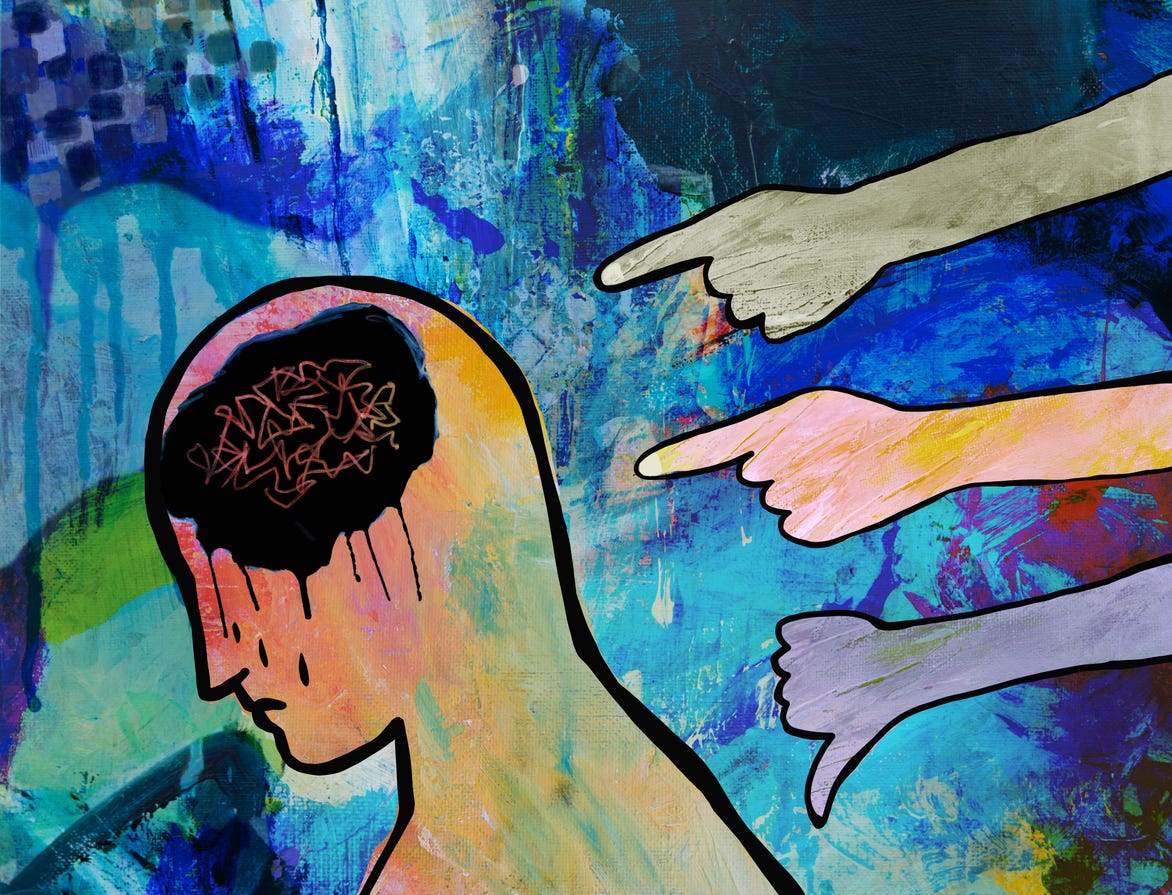
This is ethnic scapegoating. It’s as old as civilization itself, and the Christian Bible knows it better than anyone. The church has endorsed it before, in times that should stand as monuments of ecclesiastical disgrace. And the church has condemned it at its very best, indicted it with a clarity wrought through plumbing the depths of its own tradition.
The question this article asks is an obvious one, addressed particularly to Episcopal Anglican Christians. The answer, of course, pertains to the whole church: what do we say about this? We are a tradition. We have a particular theological lexicon. We have specific confessional obligations. We are heir to a global ecumenical and ecologic commitment that spans centuries. We have something to say. The question is whether we will say it.
II. The Theological Anatomy of Scapegoating
Before it can answer with any specificity what it is saying, the church must first know what it is saying against. Ethnic scapegoating is never just political or sociological. Theology, underneath the rhetoric, is always at play.
Scapegoating demands a sacred organism; some understanding of peoplehood that casts the nation or civilization itself as a body whose purity and continuity is God’s organizing will on earth. That sacred organism can be narrated with pews and stained glass or with blood and babies and the demography of replacement. Structurally, the theology is identical. The Body is sacred. Its continuity shall be ensured. You who threaten that continuity will therefore be named, identified, isolated and expelled.
The rising ugliness in American public life knows this theological structure with textbook precision. The white majority, full stop, is being narrated as demographic collapse with strong hints that our best days might be behind us. Palestinians are evicted with daily reminders of how little their bodies matter. Jewishness is both courted and scapegoated in a pattern so dual that Jews often call it the ‘vertically integrated anti-Semitism” because it can be politically activated from right and left alike. Immigrants aren’t neighbors or workers. They’re invaders. They’re not guests in our country; they’re here to replace us.
As before: theology. Each of these examples fits into the same sacred mechanism. There is a people, a folk, a volk, a bloodline of true Christian Americans. They believe themselves chosen, beloved, continuity-ensured by God. Anyone who threatens those chosen people must therefore be identified, named, and singled out. They are the opposite of us, and their otherness requires their exclusion. Even their expulsion.
The scripture of Israel knows this story better than we do, because they lived it on both sides and because the God of Israel vigorously rejects it at every turn.
Deuteronomy 10: 17-19 lays the logic bare: ’love the stranger, feeding him and clothing him.” This love for the vulnerable stranger is so central to Israel’s character that they are reminded to remember the stranger for they once were strangers themselves. ’When we forget our communal vulnerability,’ God says, ‘we’ve forgotten who we are.’
Ruth puts flesh on that theology. A woman of Moab, an outsider hated and marginalized by the covenant community finds favor with God by loving Israel. She becomes great: the grandmother of David, the ancestor of the Messiah. Jesus Christ,’ Scripture says,’ is descended from foreigners, including Ruth the Moabite. If the replacement argument is theology by another name, then Ruth is the counter-theology shouted back by God through Israel’s history and the scripture we both read.
Jonah is similarly subversive. Jonah famously balks at going to Nineveh, but what he balks at, precisely, is the freakishly generous sermon God whispers to him: Jonah should love Nineveh, God says. God loves the Assyrians! To our ears, that sounds insane. The people of God should love God’s enemies?! ?
And every generation hears Jonah react in the same way they would if God loved their enemies. Jonah 4 names what we feel when our safety gods start jeopardizing their own safety margins for messy people with messy backgrounds. This,” Jonah says in effect,” is why I fled in the first place.
But the God of Israel refuses the exile logic every bit as fiercely as Jonah does. At Golgotha, the mechanism is laid bare. The crowd. Pilate. The temple elite. The Caiaphases of this world love humanity by identifying its threatening others and expelling them. Barabbas goes free that day. Jesus, the victim of the world’s sanctified violence, is killed. The Cross reveals what Rene Girard spent a lifetime trying to say: Christianity exposes the ethnic enclosure mechanism by placing God on the victim’s side. The church that blesses ethnic scapegoating is participating in the justification of the means by which its Lord was executed.
A church that has nothing to say about border walls has allowed its theology to be made quiet by political priorities. Ethnic scapegoating is theological. The church must speak.
Show partiality? NO. Show no partiality. Love your neighbor as the Samaritan (Luke 10). Jesus said very clearly that the nations will be judged by how they treat the stranger (Matthew 25). Consistently, Christians should discern rhetoric only after they get their scripture in one hand and prayer books in the other. Because a church rendered silent before ethnic Christian nationalism has exchanged its scriptures for the civic religion of the hour.
III. What the Episcopal Anglican Tradition Carries
There is a difference between a Christian offering boilerplate general moral principles in a public moment and a Christian offering counsel from the depths of a specific, historic, confessionally articulated tradition. The first can sound an awful lot like any liberal humanism with a steeple on top. The second has something that culture cannot replicate and the moment genuinely needs.
Episcopal Anglican Christians have something specific. And Anglican Communion’ s own documents give us the vocabulary to name it.
Anglicanism is constitutively ecumenical. This is among the least known and most important features of our identity. The 19th Lambeth Conference published what it called its “Appeal to All Christian People” cementing the Anglican commitment to the vision and hope of a visible unity of the whole Church. And every Lambeth conference since that time has reiterated that commitment to ecumenicalism. The Anglican Communion Covenant names this our “ecumenical vocation of Anglicanism” describing it as “integral to Anglican identity and self-understanding.” This is a tradition that defines itself by its obligation to remain open to encounter with the other Christian.
At its best Anglicanism is constitutively interfaith as well because that ecumenical openness has always meant openness to genuine encounter with people of every faith.
This last point is made clearly by the existence of The Network for Inter Faith Concerns of the Anglican Communion (NIFCON) which exists in the Communion’ s own words “to encourage and enable growth toward genuinely open and loving relationships between Christians and people of other faiths.” NIFCON’ s parent organization the Anglican Inter Faith Commission is currently hard at work fostering Anglican understanding and friendship with other faith traditions all over the globe. This isn’t icing on the theological cake.
These are structural commitments, funded and staffed and formally authorized by Anglicans worldwide through the mechanisms of the Communion. What this means is that the Global Anglican and Episcopal church’ s relationships with our Jewish siblings, our Muslim siblings, our Palestinian Christian siblings, and with the broader Arab Christian tradition are not optional. They are part of what it means to be Anglican.
That sets a high bar for any individual church within the Anglican Communion. But that bar gets even higher when we consider that these commitments entail a set of practices known across the Communion as the Four Principles of Dialogue.
Dialogue begins when we meet each other. Dialogue requires mutual understanding and mutual trust. Dialogue opens the path to share each other’ s lives in service to our wider community. Dialogue becomes the basis for our authentic witness to the world.
Read any of those principles against the logic of ethnic scapegoating and the incompatibility isn’ t just thematic, it is absolute. For the ethnic scapegoating that we are witnessing requires that the meeting never happen. It requires that the Palestinian, the Jewish neighbor, the immigrant family remain an abstraction, a demographic figure on the census, a threat category.
Scapegoating demands we never know our neighbors as our neighbors. The four principles of Dialogue require the meeting. They require the trust. They require the shared meals. They require the mutual service to the common good. They require the authentic witness that can only emerge from actually loving our neighbors.
If you’ re Anglican: A tradition constitutionally obligated to Christian unity; through NIFCON and the Interfaith Commission to genuinely loving encounter with people of every faith; and that has built into its very self-description the Four Principles of Dialogue stands in total structural contradiction to any theology of ethnic enclosure.
Allow me to be blunt: Ethnic scapegoating is Christian heresy. Period. It is theological heresy. It is also and specifically Anglican heresy. It is a direct contradiction of the very documents by which we claim to define ourselves and our tradition.
And that still leaves the Fourth Mark of Mission. The Anglican Communion has spoken plainly about what our engagement with the wider world requires in our mission documents. The Fourth Mark, updated by the Anglican Consultative Council in 2012 to make clear its intent requires the church to seek to transform unjust structures of society, to confront violence of every kind and to pursue peace and reconciliation.
The language “of every kind” is intentional and inclusive. It includes the rhetorical violence that makes physical violence possible. It includes the quiet structural violence of dehumanizing language that spreads through political discourse and gradually makes it acceptable to move the targeted community outside the range of normal moral consideration. If the church is going to confront violence of every kind then it must confront the language that authorizes violence before anyone has even thrown the first punch.
This is not someone importing a political agenda to the church. This is the Anglican tradition reading and speaking its own foundational creeds. This is what we are asking the church to do: Be the church. Obey your own mission documents.
All of that still leaves us with the Episcopal Church’ s own liturgical life.
Let us remember that the Baptismal Covenant, as found in the Book of Common Prayer, lays out a series of questions and responses that every Christian promises to God to live by. Will you strive for justice and peace among all people and respect the dignity of every human being? Answer: I will, with God’s help. Episcopalians renew that covenant at every baptism and confirm it at every confirmation. People are being formed by these rituals into political beings who believe that their politics, their governmental policies, and their laws should be weighed against whether they provide for the dignity of every single human being. That was written over 60 years ago. And, it was meant to include every single human being the culture is currently targeting for encroaching disenfranchisement. Dignity granted not for political reasons, but rather by virtue of who the God who was and is the same and will always be has created us.
IV. What the Church Actually Says
The tradition has been preparing this answer for centuries. Here it is.
The image of God is universal category and ethnic category. The immigrant mother. The refugee father. The urban protester. The undocumented worker. Every person targeted by the scapegoating rhetoric of this moment is made in the image of God with full and unreduced weight. The church’s first word in every public context is this: baptism reveals that everyone bears, in their very being, the image of the living God and the church’s public witness flows from the announcement of that blessed bearing.
Baptism. Baptism is the only birthright the Gospel authorizes. Galatians 3: 26-29 is baptism’s charter: There is neither Jew nor Greek, slave nor free, male nor female, for all are one in Christ Jesus; and it joins the with the birthright of others. The logic that native-born neighbors and immigrants are competing against one another for resources–economic, demographic, cultural–is dissolved by baptism. Because the baptized person enters a belonging that no demographic shift can threaten and no political rhetoric can revoke, and economics must figure out.
Pentecost is the theological event that speaks most directly to the demographic anxiety animating this moment. The Spirit comes towards the multiplication of language, the gathering of every nation, the making of belonging across every possible boundary. The crowd hears each hear in their own tongue: Parthians, Medes, Elamites, residents of Mesopotamia, Judea, Cappadocia, Pontus and Asia, Phrygia and Pamphylia, Egypt, Libya, Cyrene, Rome, Crete, Arabia. Pentecost resists nativist, ethno-supremacist narratives at the level of founding story. The Spirit always moves towards more belonging; wider gathering; the multiplication of the community across every tribal line the national theology attempts to draw. The Gospel’s response to demographic anxiety and demographic change is Pentecost.
The Eucharistic Table. The Eucharistic table is constituted by Christ’s body and blood alone and the person currently being scapegoated by our political system has a seat at that table. Here is the Citizen Framework at its most concrete and demanding. The baptized person formed at the font and fed at the table carries that Eucharistic logic into every public encounter. The table says that the presence of the other is required. Christ’s body is constituted by Christ’s body and blood, and Christ sacrificed that body on behalf of the undocumented worker. Christ sacrificed that blood for the dignity of the Dreamer. The culture warrior, the so-called replacement, has already eaten at the table of the Lord and welcomed into the household of God. To protect that table for all is to practice, in the liturgical worship of the church, the argument the church must make in its civic life. The two cannot be separated without unravelling the logic of the tradition itself.
These aren’t just principles for dialogue within the tradition or between faiths. Because the baptized Episcopal Anglican Christian is a citizen of this world formed by a tradition that says we must meet. Meet with Palestinians. Meet with our Jewish neighbors. Meet with immigrants. And from that meeting comes trust. And from that trust comes shared service. And from that shared service comes authentic witness. Witness that no position paper or sermon can replicate. Because witnessing to Christ always issues from relationship; always issues from those who know each other’s names and live into the love that is still formative of our connections.
V. The Church’s Word Is Its Life
The tradition has formed the church into having something to say. The question now is whether the church will say it and whether it will say it with its body as well as its words.
Words without a worshipping community that lives them out become, eventually, white noise indistinguishable from the surrounding culture’s newsfeed yelling. The tradition is inviting the church to more than words. It is inviting Christians to be a people whose life together embodies the theological grammar they confess with their lips.
Here are three forms of embodied witness churches and leaders can offer up, right now, this moment, before the language trends any further in the direction that it’s trending.
First: public solidarity. The church that marches with Palestinian and Jewish and immigrant communities, that prays with them and serves alongside them and refuses to use the dehumanizing language spoken about them in both public speeches and private dinners is putting its theological values where its mouth is in a way the tradition authorizes and this particular cultural moment demands. The official text of Anglican Communion resolves, “our interfaith and ecumenical relationships lead us to take shared action on the great global challenges facing us as human beings.” Part of taking shared action is sharing presence. And sharing presence in this moment means visibly standing with, by name, the people who are being scapegoated in the public square even if that means being inaccurately interpreted as political when the church is, in fact, being faithfully theological.
Second: liturgical formation. The congregation that names the Palestinian child, prays by name for Jewish communities who are experiencing antisemitic harassment, and includes immigrant families in the pastoral concerns of the weekly intercessions alongside every other member of the household of God is, quite simply, forming its people to think and love politically in the way the tradition demands.
The Baptismal Covenant’s question offers this formation to the whole church every time it celebrates baptism. Will you strive for justice and peace among all peoples and respect the dignity of every human being? The church that lives this question together and catechizes its people on why the question is in the liturgy to begin with is doing the long game, friends. This is the most durable work there is.
Third: theological clarity in public witness. The bishop who names ethnic scapegoating as a theological sin, the clergy who speaks from inside the tradition’s theological framework; the lay leader who calls sin what it is inside the grammar of the tradition they love…these leaders are offering the hungry culture around us something it’s been starving for: an ethical argument that enters the public square not as a political position but as a Christian confession.
The Church claims that bearing the image of God is universal.
That is a theological claim that has enormous political implications and it sounds very different when you make it from the theological depths of Christian tradition than it does when you offer it as your opinion. The Anglican and Episcopal tradition has theological depth and political cover in abundance. It has the ecumenical mandate. It has the interfaith mandate. It has the Fourth Mark of Mission. It has the Baptismal Covenant. It has millennia of crossing cultural boundaries to welcome the stranger because the stranger bears God’s very image. The church has been formed by this grammar for two thousand years. Now it must act.
Communion ends with a sending: Go in peace to love and serve the Lord. The community that has been gathered, formed by word and sacrament into the most ancient of belonging that blood and birth can claim at no point, goes back out into the world carrying the answer to the culture’s question on its lips and in its life.
The culture is asking: whose blood determines who belongs?
The church, if it has the courage to be the church, answers from the altar table: Christ’s blood.
Christ’s blood shed for the salvation of all. For the Palestinian and the Jewish neighbor. For the immigrant family. For the person shouting slogans and screaming tweets and chanting lies about these folks who, for Christians at least, is also himself a scapegoated child of God in need of the mercy he thinks he’s so bravely withholding from others.
We are the argument. Our life together is the word that the tradition has been teaching us to be for two thousand years.