
THE EMPTY CHAIR
Rape, Sexual Violence, and the Calling of the Church

The Anglican Communion along with other NGO groups has supported the empty ‘red chair’ movement. The red chair is an image of the silent suffering of human beings due to gender based violence and those who have died because of it. It is a visible sign pointing to an invisible reality too large to speak plainly. The chair says what our words struggle to say. Someone belongs here. Someone is not here. Someone has been taken.[1]
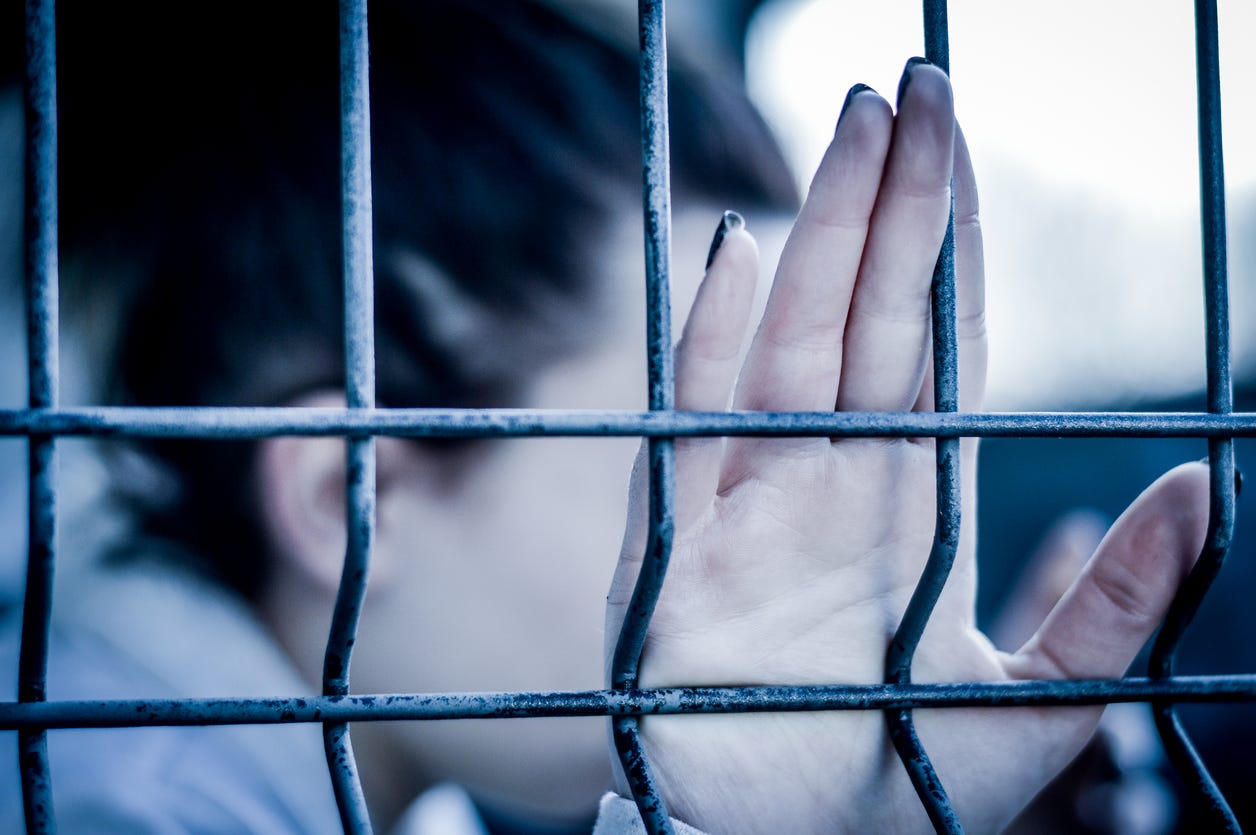
Today, somewhere in a detention facility in Texas, in Georgia, in California, in Arizona, a woman is in custody. She has been charged with no crime. She has been convicted of nothing. She came to a border because she was fleeing something we cannot imagine from the safety of our sanctuaries: a gang, a cartel, a husband with a weapon, a government that hunted her children. She arrived asking for asylum, which is not a crime. In fact many like here were allowed here legally, given asylum and papers, and have fallen through the cracks of inefficient government processes. Just such a woman was placed in a facility managed by a private contractor, supervised by federal officials, governed by administrative standards that, as of early 2025, are no longer enforced by any independent oversight body.
The offices that received her complaints have been closed. The investigators who would have substantiated her report have been reassigned or dismissed. And the men responsible for her safety have been told, in the language of their president, that people like her are “garbage.”[2]
The empty chair is hers and those like her.
I. What We Know
The Christian tradition has always insisted that moral ignorance, once removed, becomes moral responsibility. You cannot un-know what you have been told. And so I am telling you what the record shows.
Between 2015 and 2018, the federal Office of Refugee Resettlement received more than 4,500 allegations of sexual abuse and harassment involving children in its custody: more than 1,000 per year, every year.[3] Over 170 of those complaints were against staff: not other detainees. The assaults were by the people responsible for care.[4]
Between 2010 and 2017, migrant women filed more than 1,224 formal complaints of sexual assault by ICE officials with the Department of Homeland Security, in nearly every state that operates detention facilities.[5] The agency’s inspector general investigated 2.4 percent of them.[6] This abuse crosses over political lines and is the responsibility of all our elected officials; as both parties are culpable for this abuse and unresponsive to the need.
In 2018 alone, ICE recorded 374 formal accusations of sexual assault in its facilities.[7] A peer-reviewed study in the Journal of the American Medical Association found that by 2021, allegations of sexual assault by facility staff had increased 134 percent over two years.[8]
In 2024, the Department of Justice filed suit against Southwest Key Programs, the largest provider of housing for unaccompanied migrant children in the country, operating under billions of dollars in federal contracts. The lawsuit documented more than 100 cases of sexual abuse at its shelters. Children as young as five years old.[9]
In 2025, a Senate investigation identified 510 credible human rights violations in immigration detention since January 20 of that year: 41 involving physical or sexual abuse, 14 involving mistreatment of pregnant women. Investigators noted that the numbers were not exhaustive. Witnesses were being deported before they could testify. The oversight offices that would have received their complaints had been systematically closed.[10]
These are not allegations from advocacy organizations with ideological agendas. They are congressional investigations, peer-reviewed medical studies, Department of Justice lawsuits, and Bureau of Justice Statistics reports. The record is not contested. It is simply unattended to.
There is something important to say about comparison. Every person in a federal or state prison, however severe their crime, retains constitutional protections against cruel and unusual punishment. The Eighth Amendment is their floor. Immigration detainees are held under civil, not criminal, authority. They have no equivalent floor. The population with the least legal culpability in our custody is being held with the least legal protection.[11]
This is not a political observation. It is a description of a moral inversion at the heart of our justice system. And the tradition we have inherited has a name for moral inversions. It calls them sin.
II. The Language That Made It Possible
In 2015, immigrants were described as rapists and criminals.
In 2018, human beings in federal custody were described this way: “I don’t know if you call them people. In some cases, they’re not people, in my opinion.”[12] The same year, their presence in America was described as “poisoning the blood.”[13] When the historical parallels of that phrase were pointed out, they were not denied.
In December 2025, Somali Americans, legal residents and citizens, 260,000 people who live and work and worship among us”come from hell,” and are said to, “contribute nothing.”[14] In March 2026, members of Congress posted that Muslims “don’t belong in American society.”[15] The Speaker of the House did not rebuke them.
I am not making a partisan point. I am making a theological one. These are God’s people, and they are images of the divine. Their value is not economic but given and inherited from the divine imago dei.
When a public leader says of human being in federal custody “I don’t know if you call them people,” this is not being impolitic or impolite. He is making a claim about the nature of personhood. He is saying that the imago Dei, the image of God, is contingent. That it applies to some bodies and not to others. That it can be suspended by national origin, by legal status, by the language of disgust.
The Christian tradition has a 2,000-year record of opposing exactly this claim. The image of God is not a privilege granted by governments. It is a fact of creation, written into every human being before any nation existed to have an opinion about it.
Scholars who study atrocity have documented a consistent progression: define the out-group, attach disgust language, pathologize them, claim national danger, introduce exclusion policy, normalize harsher enforcement.[16] What we have witnessed in the last decades follows this sequence. The rhetoric is not merely offensive. It is the permission structure for the abuse. Guards who have been told that the people in their custody are “vermin” and “garbage” have been given an instruction, even if it was never formally issued.
III. What the Scripture Says
I know there are those who will reach for their Bibles at this point and find ambiguity. And I will not pretend the ambiguity is not there.
There are texts in our Scripture that treat the violation of a woman as a property crime against her father. There are narratives in which the violated woman is given no voice, no justice, no name in the record. The Bible does not sanitize the history of what human beings do to one another.
But there is also this.
In the second book of Samuel, chapter thirteen, there is a woman named Tamar. She is the daughter of a king. She is raped by her half-brother. When it is over, she says to him, and the text preserves her words even though the institution preserved nothing else for her: “No, my brother, do not force me. Do not do this wanton thing.”[17] The Hebrew word she uses is nebalah: the strongest term in the language for an act that tears the moral fabric of the community. She names what happened with theological precision.
Her father the king, when he heard what had been done, was “very angry.” He did nothing. Tamar went to live, the text tells us, as “a desolate woman.”
She named it. The institution had the language. The institution had the power. The institution had the anger. And the institution did nothing. The woman remained desolate. The people of God that believe this is a terrible thing, are very angry, and does nothing are like David. And the tradition does not excuse David.
Lamentations chapter five, verse eleven: “Women are ravished in Zion, young women in the towns of Judah.”[18] This is not metaphor. This is the community naming its wounds before God as evidence of catastrophic covenant failure. The text does not call this collateral damage. It calls it a wound that demands lament, witness, and response. we are called to lament, to be truthful in witness, and respond.
Paul writes to the Corinthians that the body is the temple of the Holy Spirit. Not the soul. The body.[19] The body of the woman in detention. The body of the child in the shelter. The Spirit of God dwells there. To violate that body is not merely a crime. It is a desecration. It is sacrilege committed against the dwelling place of God.
The canonical trajectory of Scripture moves across both Testaments toward the protection of the violated and the condemnation of those who would look away. We have been given this Scripture. This is our inherited tradition.
IV. The Calling of the Church
I am not asking you to adopt a political position. I am asking you to take your baptism seriously.
In the waters of baptism, we were each claimed by God and marked as Christ’s own forever. We promised to seek and serve Christ in all persons. We promised to strive for justice and peace among all people. We promised to respect the dignity of every human being.[20] These are not aspirations. They are the operative commitments of the baptized life, available to us now, requiring exercise now, in the world as it actually is.
The world as it actually is contains women in detention centers who have been sexually violated by the people responsible for their care, whose complaints have not been investigated, who have been deported before they could testify, and who have been told by the language of the men commanding their guards that they are not people.
The Church has said otherwise for thirty years. The 1994 General Convention condemned violence against women in all its forms and called on every parish to develop ministry to this end.[21] The 2018 Convention named the specific vulnerability of immigrant women and directed the Church’s advocacy on their behalf.[22] The 2024 Convention affirmed ongoing commitment to education and advocacy addressing violence against women and girls.
What remains is not words. It is action: lament, truthful witness, and response.
The calling of the Church in this moment is threefold. It is to pray, to teach, and to care.
Pray
Prayer is not the consolation prize for those who cannot act. It is the ground of all action. It is the act by which we place ourselves in the presence of the God who sees what is hidden, who hears the cry that rises from the locked room, who was himself held in custody and executed by a state that declared him dangerous.
Pray for the women whose names we do not know. Pray for the children who arrived at a border alone. Pray for the pregnant women sleeping on concrete floors. Pray for the witnesses who were put on planes before they could speak.
Pray on Sunday mornings in your congregation’s intercessions. Name it. The Prayers of the People are the Church’s act of bringing the world’s wounds into the presence of God and refusing to look away. If we cannot name it in prayer, we cannot name it anywhere. If we can name it in prayer, we have already begun.
The Anglican Communion has given us the words: “Holy and compassionate God, in whose image we all have been formed, we ask your love to surround women, girls and all who suffer injustice, abuse and other violence. Empower your Church to work as Christ’s heart and hands in bringing justice and peace to all communities and families.”[23] Pray it until it becomes conviction. Pray it until conviction becomes commitment.
Teach
The abuse documented in our detention centers is not happening for lack of information. It is happening in the full light of congressional investigations, peer-reviewed research, and journalistic record, because most of the people who could bring pressure to bear on it do not know it is happening or look the other way.
Teach in your congregations. Teach in your formation programs. Teach your confirmation classes and your adult forums and your small group ministries. Teach that every human being bears the image of God, that this is a non-negotiable claim of the tradition and not a political preference, and that the language of dehumanization, however normalized it becomes in the public square, remains a theological error of the first order.
Teach the comparison that cuts through political defensiveness: the person in immigration detention has been convicted of no crime. She has less legal protection than the convicted criminal in a federal prison. She is held by a government that invokes Christian civilization while denying her the most basic protections that civilization exists to provide.
Teach your people how to read the record, how to evaluate the evidence, how to hold the complexity without letting the complexity become an excuse for inaction. We must form people in this way, for this work, on this theme and all themes where our society is violating the imago dei.
Care
The Church’s most ancient response to human suffering has never been a resolution passed at a distance. It has been a person, formed and sent, walking through a door to be present to the one who has been abandoned.
I am calling the laity of this Church to consider what it means to be trained, equipped, and approved to enter detention facilities: not as advocates arguing policy, not as protesters with signs, but as Christians fulfilling their baptismal covenant. To pray with the detained. To sit with the suffering. To be a witness whose presence says: you are seen. You are not forgotten. The Church of God knows you are here.
The ministry of presence is not nothing. It is the ministry of the Incarnation. It is what God did. The Church has always done this in the places where the vulnerable are held: in prisons, in hospitals, in refugee camps, in the worst rooms of every era. The Church went there. The Church sat there. The Church prayed there. And the presence of a witness changes what can be done in the dark.
Make the commitment now. Say to your rector, your bishop, your diocesan leadership: I am willing to be trained. I am willing to go. I am willing to sit in the empty chair and bear witness in the name of the God who sees.
V. A Word for Those Inside
My Anglican realism requires that I say something more that is very important.
There are men and women inside these agencies who know exactly what is wrong with what is happening. Karl Loftus, an independent journalist who has spent months conducting anonymous interviews with ICE and Homeland Security Investigations agents, has given us a picture of those people. One HSI agent, whose primary mission is protecting children from sexual exploitation, told him that agents have been pulled off child sexual abuse investigations to focus on immigration enforcement. “If they gave child exploitation cases a fraction of the attention, funding, resources, personnel, and analytical support that they’re now giving immigration enforcement,” the agent said, “we could do so much good.”[24]
Read that carefully. The same agency that is failing to investigate sexual abuse of detainees is simultaneously pulling its child protection investigators off child protection work. The people inside the agency who care most about exactly the crisis at the heart of this essay are being prevented from addressing it by the very enforcement priorities generating the harm. Loftus reports that agents who speak up internally are told they will be fired. The channel for conscience inside these institutions has been closed.[25]
This essay is an invitation for our country and those within ICE and the detention centers to open a channel for conscience.
To the agents and officers inside these facilities who are troubled by what they are seeing: the tradition of this Church has always held that there is a moment in every institution, in every era, when the individual conscience is the last check on institutional wrong. You know what is happening. The God before whom all things are known sees the difference between the officer who participates and the officer who refuses, between the guard who silences a complaint and the one who writes it down, between the agent who looks away and the agent who finds a way to make sure someone outside knows.
We are not without options, even when it feels that way. We are not without allies. Our moral agency has not been suspended by your employment. And there is a Church that will receive you, support you, and stand with you if you choose to act on what you already know is right.
VI. The Choice Before Us
We have been given everything we need. We have a theology that names the image of God in every person without exception. We have a Scripture that preserves the voices of the violated even when institutions refused to. We have a tradition of witness in closed places, stretching from the earliest Christian visits to Roman prisons to the present day. We have a baptismal covenant that does not say “strive for justice when it is politically convenient”: it says strive for justice among all people, and respect the dignity of every human being.
All of this. And women in detention whose complaint has not been investigated.
The empty chair is the space between what we say we believe and what we are doing about it.
The calling of the Church in this hour is not complicated. It is simply costly. Pray. Teach. Care. Put yourself in the room. If you are moved by the essay, find ways to help, to act, and to love those being abused. Let the witness of your presence be the Church’s answer to the language of dehumanization: not a counter-argument, but a counter-presence. A body in the room that says, by being there: she is a person. The image of God lives here. We have come.
The tradition gives us one assurance. The God of Lamentations hears the cry that rises from the ruined city. The God who preserved Tamar’s words when the institution threw her away. The God who became flesh, who was himself interrogated by a governor, held in a Roman cell, executed on the order of a state that declared him an enemy. That God is moved by what is happening in our detention centers.
We pray to that God. We are sent by that God. We go in the name of that God into the locked rooms of this world.
End Notes
[1]The Red Chair Project emerged from the International Anglican Women’s Network and has been deployed by dioceses across the Anglican Communion as a witness to women missing due to domestic abuse. For the Anglican Communion’s formal institutional stance on gender-based violence, see Primates’ Letter to the Churches Regarding Gender Based Violence (Dublin: Anglican Primates’ Meeting, January 2011), available in English, French, Spanish, Swahili, and Portuguese through the Anglican Communion Office.
[2]Donald Trump, remarks at Cabinet meeting, December 2, 2025, as reported in multiple outlets including Associated Press, December 5, 2025: “We don’t want ‘em in our country” (stated five times of Somali Americans); Somali Americans “come from hell” and “contribute nothing.” A study of 200,000 congressional speeches and 5,000 presidential communications found Trump “the first president in modern American history to express sentiment toward immigration that is more negative than the average member of his own party.” See Leah Boustan et al., Proceedings of the National Academy of Sciences, cited in Associated Press, 2025.
[3]Office of Refugee Resettlement, U.S. Department of Health and Human Services, as reported in Pam Fessler, “Sexual Assault of Detained Migrant Children Reported in the Thousands Since 2015,” NPR, February 26, 2019. The federal records confirmed more than 4,500 allegations between 2015 and 2018, with 1,000 or more in each of the four years.
[4]Of the 4,500+ allegations, 178 complaints were specifically against shelter staff, including youth-care workers. Fessler, NPR, 2019.
[5]Mara Silvers and Ryan Devereaux, “1,224 Complaints Reveal a Staggering Pattern of Sexual Abuse in Immigration Detention. Half of Those Accused Worked for ICE,” The Intercept, April 11, 2018. The 1,224 figure derives from FOIA records obtained from the DHS Office of Inspector General covering 2010 through September 2017.
[6]Freedom for Immigrants, analysis of DHS Office of Inspector General data, filed as a federal complaint with the Office for Civil Rights and Civil Liberties, April 2017. The OIG investigated 24 of 1,016 sexual abuse complaints filed between May 2014 and July 2016, or 2.4 percent of the total. See also “Sexual Assault,” Freedom for Immigrants, freedomforimmigrants.org.
[7]Lomi Kriel and ProPublica, “Lawyers Claim Pattern of Sexual Abuse in El Paso Immigrant Detention Center,” The Texas Tribune, August 14, 2020. ICE confirmed 374 formal accusations of sexual assault in fiscal year 2018, of which 48 were substantiated and 29 remained pending.
[8]Rupali Limaye et al., “Trends in Sexual Assault Against Detainees in US Immigration Detention Centers, 2018-2022,” JAMA Network Open 6, no. 1 (January 24, 2023). The study analyzed ICE Facility Significant Incident Reports from September 2018 to April 2022 and found allegations against facility staff increased 134 percent between 2019 and 2021.
[9]Amna Nawaz et al., “Migrant Children Suffered ‘Severe’ Sexual Abuse Under Housing Provider’s Care, DOJ Says,” PBS NewsHour, July 19, 2024. The DOJ lawsuit against Southwest Key Programs, filed in Austin, Texas, cited more than 100 reports of sexual abuse or harassment at its 29 shelters since 2015. The federal government awarded Southwest Key more than $3 billion in contracts from 2015 to 2023.
[10]Office of Sen. Jon Ossoff, U.S. Immigration Detention Oversight (Washington, D.C.: U.S. Senate, July 21, 2025). The investigation, conducted through interviews with 46 detainees and their families, correctional staff, attorneys, doctors, and nurses, and site inspections of six facilities in Texas and Georgia, identified 510 credible reports since January 20, 2025, including 41 of physical or sexual abuse and 14 of mistreatment of pregnant women. See also Phil McCausland, “Hundreds of Alleged Human Rights Abuses in Immigrant Detention, Report Finds,” NBC News, August 5, 2025.
[11]Immigration detainees are held under civil administrative authority, not criminal law, and therefore lack Eighth Amendment protections against cruel and unusual punishment that apply to convicted prisoners. For the substantiation disparity, see Bureau of Justice Statistics, Sexual Victimization Reported by Adult Correctional Authorities, 2019-2020 (Washington, D.C.: U.S. Department of Justice, 2021): 36,264 allegations reported in 2020. For the ICE rate comparison, see Limaye et al., JAMA Network Open, 2023: sexual assault occurring at a rate up to 3.5 times higher than the 2020 general U.S. population.
[12]Donald Trump, remarks at campaign rally, Ohio, March 2024, as reported by Geoff Bennett, “Trump Under Fire Again for Violent Language and Dehumanizing Anti-Immigrant Rhetoric,” PBS NewsHour, March 19, 2024. Trump’s precise words: “If you call them people. I don’t know if you call them people. In some cases, they’re not people, in my opinion.”
[13]Donald Trump, remarks using the words “vermin” and “poisoning the blood,” various campaign events, 2023-2024. When asked in a Fox News interview whether he was aware these phrases echoed Hitler and Mussolini, Trump replied: “I didn’t know that, but that’s what they say. Because our country is being poisoned.” Reported by Bennett, PBS NewsHour, 2024. On the historical pattern of such language preceding ethnic violence, see Gregory Stanton, The Ten Stages of Genocide (Washington, D.C.: Genocide Watch, 2016).
[15]Rep. Andy Ogles (R-TN), social media post, March 2026: “Muslims don’t belong in American society. Pluralism is a lie.” Rep. Brandon Gill (R-TX): “No more Muslims immigrating to America.” Rep. Randy Fine (R-FL): “We need more Islamophobia, not less.” Speaker Mike Johnson cited concerns about Sharia law rather than rebuking the remarks. Reported by WFSU/NPR, March 14, 2026.
[16]The six-step dehumanization sequence is documented across multiple disciplines. See Gregory Stanton, The Ten Stages of Genocide; David Livingstone Smith, Less Than Human: Why We Demean, Enslave, and Exterminate Others (New York: St. Martin’s Press, 2011); and Philip Zimbardo, The Lucifer Effect: Understanding How Good People Turn Evil (New York: Random House, 2007). For the specific application to immigration rhetoric, see Khaled A. Beydoun and Erika K. Wilson, “Reverse Passing,” UCLA Law Review 64 (2017).
[17]2 Samuel 13:1-22. The Hebrew term nebalah (translated variously as “wanton thing,” “outrage,” or “folly”) is the strongest term in biblical Hebrew for a violation of the communal moral order. See Phyllis Trible, Texts of Terror: Literary-Feminist Readings of Biblical Narratives (Philadelphia: Fortress Press, 1984), 37-63, for the definitive feminist theological reading of Tamar’s narrative. Trible’s analysis of David’s non-response (”he would not punish his son Amnon, because he loved him”) is particularly germane to the institutional silence addressed in this essay.
[18]Lamentations 5:11. The book of Lamentations is now widely understood by scholars as a communal lament following the Babylonian destruction of Jerusalem in 587 BCE. Sexual violence is named explicitly as part of the catalogue of catastrophe, presented not as incidental but as evidence of covenant failure requiring lamentation and response. See Kathleen O’Connor, Lamentations and the Tears of the World (Maryknoll: Orbis Books, 2002).
[19]1 Corinthians 6:19-20: “Do you not know that your body is a temple of the Holy Spirit within you, which you have from God, and that you are not your own? For you were bought with a price; therefore glorify God in your body.” The pneumatological significance of bodily integrity for a theology of sexual violence is developed in C. Andrew Doyle, Pneumaesthetics (unpublished manuscript). The argument that sexual violation constitutes a pneumatological offense, not merely a moral wrong, represents a deepening of the tradition’s resources beyond standard natural law arguments.
[20]The Book of Common Prayer (New York: Church Publishing, 1979), 305. The Baptismal Covenant, adopted at the 1976 General Convention of the Episcopal Church, includes the promises to “seek and serve Christ in all persons, loving your neighbor as yourself” and to “strive for justice and peace among all people, and respect the dignity of every human being.” For the theological significance of baptism as commissioning, see C. Andrew Doyle, Citizen: Faithful Discipleship in a Partisan World (New York: Morehouse, 2019).
[21]The Episcopal Church, General Convention Resolution 1994-A049, 71st General Convention: “Resolved, That this 71st General Convention condemn violence against women in all its forms, and resolves that each deputy and bishop will work toward making the Episcopal Church a truly safe place for all God’s people, by encouraging every parish to develop appropriate ministries to this end.” See also Resolution 2018-A178, which specifically named immigration policy and its impact on migrant women and children, directing the Office of Government Relations to address the specific needs of women and children migrants.
[22]The Episcopal Church, General Convention Resolution 2018-D016, Task Force on Women, Truth and Reconciliation, charged with “gender-based discrimination, harassment, and violence” against women and girls. See also Resolution 2024-A089, 81st General Convention (Louisville, Kentucky, June 2024), affirming ongoing advocacy addressing violence against women and girls. For the full legislative record of TEC’s response to gender-based violence, see the Acts of Convention database, episcopalarchives.org.
[23]Anglican Communion Exposure Campaign Prayer, available at anglicancommunion.org/mission/gender-justice/exposure-campaign-prayers.aspx. The prayer specifically names “women who are victims of rape as a weapon of war” and migrant women facing gender-based violence.
[24]Karl Loftus, interview with WIRED, published March 18, 2026, as reproduced in DNYUZ, March 18, 2026. The HSI agent’s precise words: “If they gave child exploitation cases a fraction of the attention, funding, resources, personnel, analytical support, etc. that they’re now giving immigration enforcement, we could do so much good.” Loftus conducts anonymous interviews with ICE, HSI, and CBP agents through the Instagram account @deadcrab_films under the project title “Confessions of an ICE Agent.”
[25]Loftus, WIRED, 2026. The agent’s description of internal culture: “Anyone who speaks up internally is gone, pretty much. That’s not even talking about speaking to the media.” The 353 percent increase in use-of-force reporting in the first two months of 2025 is documented in American Oversight, FOIA records filed and litigated in federal court, reported in Truthout, February 2026.
SELECTED BIBLIOGRAPHY
Primary Sources
The Book of Common Prayer and Administration of the Sacraments and Other Rites and Ceremonies of the Church. New York: Church Publishing, 1979.
Anglican Communion Office. “Exposure Campaign Prayers.” anglicancommunion.org/mission/gender-justice/exposure-campaign-prayers.aspx.
Anglican Primates. Primates’ Letter to the Churches Regarding Gender Based Violence. Dublin: Anglican Primates’ Meeting, January 2011.
The Episcopal Church. Acts of Convention: Resolution 1994-A049, 71st General Convention. episcopalarchives.org.
The Episcopal Church. Resolution 2018-A178; Resolution 2018-D016; Resolution 2024-A089. Acts of Convention. episcopalarchives.org.
Office of Senator Jon Ossoff. U.S. Immigration Detention Oversight. Washington, D.C.: U.S. Senate, July 21, 2025.
Government and Statistical Sources
Bureau of Justice Statistics. Sexual Victimization Reported by Adult Correctional Authorities, 2019-2020: Statistical Tables. Washington, D.C.: U.S. Department of Justice, 2021.
U.S. Government Accountability Office. Immigration Detention: Additional Actions Could Strengthen DHS Efforts to Address Sexual Abuse. GAO-14-38. Washington, D.C.: GAO, November 2013.
Academic and Peer-Reviewed Sources
Limaye, Rupali, et al. “Trends in Sexual Assault Against Detainees in US Immigration Detention Centers, 2018-2022.” JAMA Network Open 6, no. 1 (January 24, 2023).
O’Connor, Kathleen. Lamentations and the Tears of the World. Maryknoll: Orbis Books, 2002.
Smith, David Livingstone. Less Than Human: Why We Demean, Enslave, and Exterminate Others. New York: St. Martin’s Press, 2011.
Stanton, Gregory. The Ten Stages of Genocide. Washington, D.C.: Genocide Watch, 2016.
Trible, Phyllis. Texts of Terror: Literary-Feminist Readings of Biblical Narratives. Philadelphia: Fortress Press, 1984.
Journalism and Investigative Sources
Devereaux, Ryan, and Mara Silvers. “1,224 Complaints Reveal a Staggering Pattern of Sexual Abuse in Immigration Detention. Half of Those Accused Worked for ICE.” The Intercept, April 11, 2018.
Fessler, Pam. “Sexual Assault of Detained Migrant Children Reported in the Thousands Since 2015.” NPR, February 26, 2019.
Futuro Investigates / PBS NewsHour. “Hundreds of Immigrants Have Reported Sexual Abuse at ICE Facilities. Most Cases Aren’t Investigated.” PBS NewsHour, July 21, 2023.
Kriel, Lomi, and ProPublica. “Lawyers Claim Pattern of Sexual Abuse in El Paso Immigrant Detention Center.” The Texas Tribune, August 14, 2020.
Loftus, Karl. “Confessions of an ICE Agent.” @deadcrab_films, Instagram. Interview published in WIRED, March 18, 2026.
McCausland, Phil. “Hundreds of Alleged Human Rights Abuses in Immigrant Detention, Report Finds.” NBC News, August 5, 2025.
Nawaz, Amna, et al. “Migrant Children Suffered ‘Severe’ Sexual Abuse Under Housing Provider’s Care, DOJ Says.” PBS NewsHour, July 19, 2024.