
Anglicanism, The Pope’s Encyclical, and Artificial Intelligence
1 in AI Series: An Anglican Realist Argument Against the Analogia Entis, with a Reading of Pope Leo XIV’s Magnifica Humanitas

This is post 1 in a series on artificially created intelligence.
Introduction
Picture Moses beyond both town and pasture. Out past the farthest edge of wilderness where his father-in-law’s flock grazed, there came a sight that stopped him in his tracks. It was a thornbush burning. This scrub did not burn up. Leaf and branch contained the flame and were not consumed. And somehow fire that fed on air alone was holy, holy enough to drag him away from work. He moved closer. ’God spoke to him out of the bush…’ but first God stopped Moses at the edge of the light with these words: ‘take off your sandals, for the place where you are standing is holy ground.’ There’s something significant about the bush staying a bush. Because a bush, some scrubby plant on the hillside, birds made nests, was God’s throne when God chose to dwell upon it and speak from there. The ground was holy because God addressed a man grounded there, not because anyone else had ever been there before.
Now put that picture next to the first picture we have of human pride: The plain of Shinar, brick and bitumen for mortar. A tower meant to reach heaven so that those who built it could make a name for themselves. That tower was a ladder of sorts. But really, it was human presumption at its starkest – it was the belief that you could ascend to God. That people could walk up a gradual slope, from earth to Elohim, supported by nothing but their own steady exertion and merit. Never mind that they’d been told to be fruitful and multiply, to go out and fill the world, to bless everyone else, and had forgotten all of that.
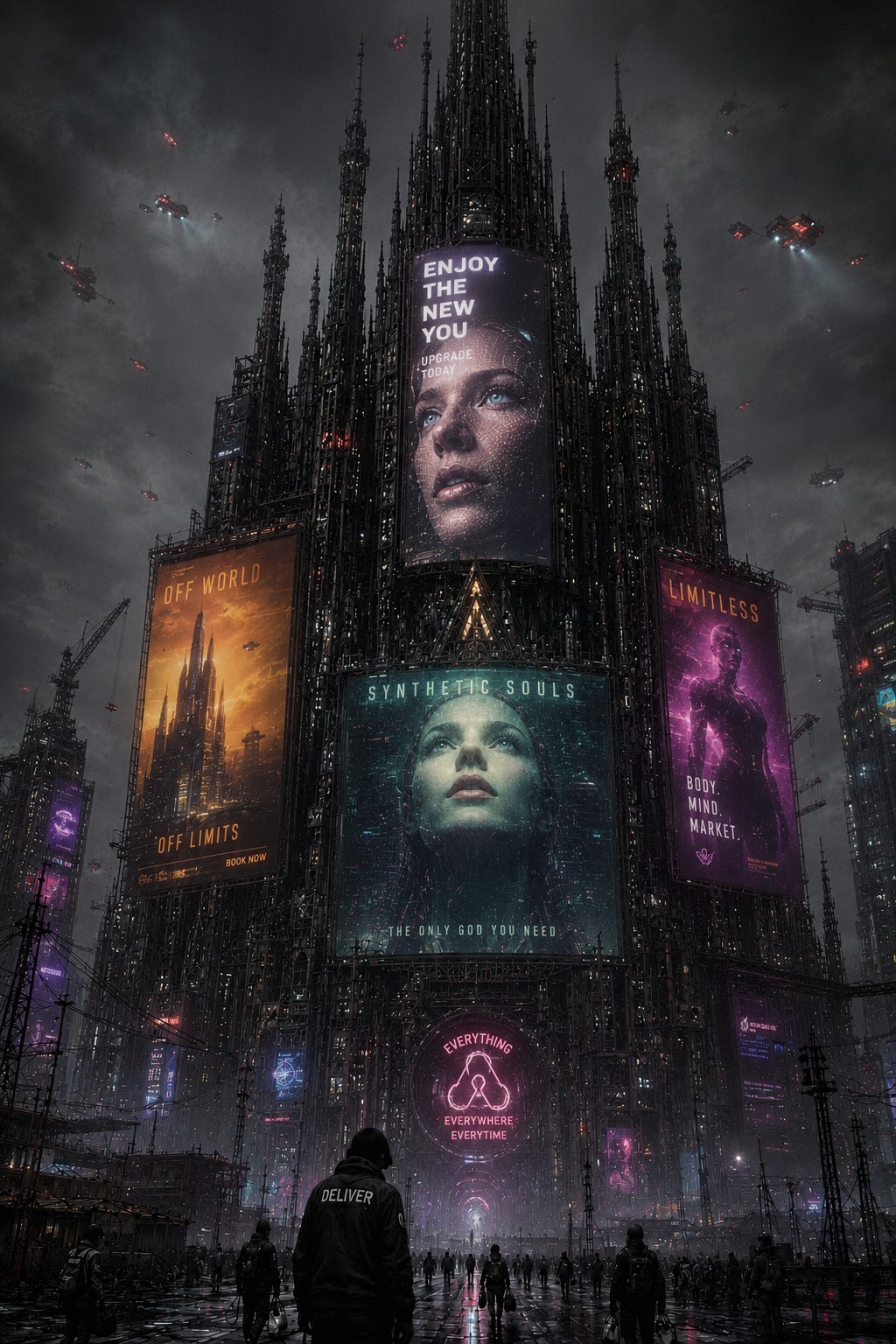
These two pictures frame what I want to say about analogia entis, as a foundation principle for the conversation about human beingness and artificial intelligence. The Christian West has a long tradition of understanding how creatures mirror their Creator, and it reaches its clearest formulation in the work of Roman Catholic theologian and philosopher Erich Przywara. He called it analogia entis or the analogy of being.[1] I believe that account, while beautiful and having served us well for many years, nevertheless reads the creature upon rung on a ladder when the creature is in truth a bush that burns. Moreover, the Papal encyclical Magnifica Humanitas (Humanitas) finds its source in its theology. My quarrel is with the anologian entis grammar of this approach before it is with any particular conclusion drawn from it, and I commend instead an Anglican grammar: realist about creation, confident that matter can bear the Word, doxological about the human person, and ordered throughout by the conviction that the divine Logos is prior to every creature it sustains. I will make the case in three areas where, I think, the difference between the grammars presents itself most starkly: creation, the human creature, and (finally) strange new artifacts of artificial intelligence. And then we’ll read Pope Leo’ great encyclical Humanitas against that light. It reaches toward the sort of Christian humanism I’m defending while setting much of its dependence on the older account, and the seam between the two is where the pastoral stakes come into view.
Stated Fairly: Przywara and the Analogy of Being
Fairness requires that we state the analogy of being fairly. We gain nothing by knocking down a straw man. Przywara drew together a long tradition, Augustinian, Thomist, and finally his own private treasure house, into a coherent Christian anthropology. It is an amazing and important Christian work. In it, creator and creature stand in relation of similitude that is superseded by a greater dissimilitude. The Fourth Lateran Council made analogia entis canon in 1215: quanto maior est ➔ creatorem creata, tanto maior est ➔ distare a creatore. ’However great the similarity between the creature and its creator, yet the dissimilarity from the creator is ever greater.’[2] (This is a reflection of Anselm’s ancient ontological argument from 1078.)[3] In 1932, Przywara made the Lateran Council and the history a maxim, the foundation of a complete metaphysics, an antithesis that he interpreted as God in us and God beyond us, the divine both closer to the creature than it is to itself and always beyond the creature’s reach.[4] Being itself creates both a bond and a fissure. God is Being itself in Its own fullness; the creature possesses its being by loan, hanging over the abyss of its own contingency, and the donation of being writes a similitude recoiling toward the donor.[5]
There is nobility in this narrative. It refuses to seal God off behind an iron curtain of sheer transcendence. But it also refuses to pin God to the furniture of the world. It allows philosophy and theology to share the same dinner table. It allows the creature to mean something. It allows a mountain or a melody or a human face to bear a real (if analogical) resemblance to the source of all majesty. David Bentley Hart – whose work alongside John Betz produced the best English translation of Przywara’s text we’ll likely ever get, has spent his career arguing this point precisely: lose the analogia entis, and you cut creation loose from God, leaving a metaphysical vacuum into which some idol will rush to crash.[6]
I take that warning to heart. I want to protect the theological boundary.
I remain convinced that the ladder, though misnames the bush. Barth heard that danger first and named it with a ferocity that has resounded these hundred years. ’The analogy of being,’ he wrote, ‘is the invention of the Antichrist, and the one weighty reason why a man might give for declining to become a Roman Catholic.’[7] Those are strong words. What scared Barth was the ladder. Any analogy of being between Creator and creature, any proportionality located in the creature qua creature, threatened him with providing the resources for human reason to climb to God by degrees up the ladder of its own essence. The result would be natural theology, and ultimately a church baptizing whatever culture happened already to be worshiping. Historians know immediately that Barth had seen it. Hitler crucified Christ beside the swastika, and Barth had seen the cross emptied of its meaning and so raised with men venerating it who thought their blood and their countrymen ways up to God. Barth protested against idolatry, and there was no greater theological courage except for perhaps Bonhoeffer. The remedy Barth found was to deny any resource in creation for knowing God apart from Jesus, and the witness of Scripture cuts. What results is muteness. Creation by itself, with no Christ or Bible to teach it to speak, goes silent. Between these two formidable objections as an Anglican theology stands, I do, we do often, and it is my view from this vantage that they are two respective errors facing each other across a great truth: the pyramidal ascent and the deep truss-cut canyon. We risk with Przywara allowing the glow of being to seen as if it climbs all the way up until the true Light of the Mountain is eclipsed by the brightness of the system itself. We risk with Barth allowing all creation to go dark, until the only thing that can be heard shouts down into the silence of a depravity that has been robbed of all capacity to receive it. I deny both as a sole solution.
An Anglican Stance: The World the Ladder Misreads
Return to the bush. For here is another vision, with a different grammar altogether. The bush is indwelt. The Word who will someday make flesh of himself is already the one in whom and through whom and for whom all things hold together, and the bush burns because that Word has come near to speak. This is the hinge of the Anglican realism I’d like to commend: the divine Logos comes before creature, before creature’s being, before every reaching out of a mind toward God. The creature does not start from some neutral baseline from which it later recognizes a similarity upwards. It starts already spoken; held in the Word as a word, an inscape greeted before it is ever inspected. Now this, in my judgment, turns the whole question topsy-turvy.
For Anglican realists, an analogy of faith shares a tacit premise: there is such a thing as creation considered, nature considered apart from grace, and we only disagree about whether that nature points to God or not. But seen properly, there is no such thing as nature unviewed from the loving eyes of the Creator. To speak of it is to posit a fiction, a phantom ontology, a word with nothing beneath it. This, friends, is what I’ve called elsewhere the fifth stance: to posit any context in which nature merely is, whether to climb it or chop it down, is to fundamentally misunderstand a universe whose fundamental grammar is gift and address.[8] The point against the analogy of being is ultimately this: It attempts to answer a question that should never have been asked. It struggles to construct a bridge of similarity across a divide which the Logos has already surpassed by dwelling within it. Richard Hooker understood this clearly at the headwaters of Anglican theology, before centuries of division clouded the issue. He taught that every created thing keeps a law in Book 1 of Laws, and that the law it keeps is its share of participation in the eternal law by which God acts so that of law itself. It may be said that creation’s seat is the bosom of God, and voice the harmony of the world.[9] Hooker’s creation is not a ladder for the creature to climb. It is not a darkness the creature inhabits alone. It is a sounded order, a hymn to every creature who is held by the same wisdom that orders angels and stars, wisdom that, as the Proverb sings and Pope Leo’s encyclical beautifully recalls, ‘was beside the Maker like a little child, rejoicing before the work that was made in praising Him, when He sung morning to evening, and joyfully set His tabernacle in the inhabited world.’[10] To exist is to be spoken to. To be spoken to is to be invited to participate. To participate is to be called to respond. Creatureliness’s resemblance to God is authentic, just as authentically as Przywara wanted it to be. It only lives in the mode of gift and call rather than the mode of ascent.
Austin Farrer, perhaps the most probing Anglican philosophical theologian of the 20th century, phrased it most acutely. Against any depiction that places God and creature in rivalry with one another, as if when the creature does more, God does less, Farrer articulated the notion of double agency: God acts in and through the creature’s action, the first cause working through the secondary cause, such that one action is fully that of the creature and fully God’s gift, simultaneously.[11] The bush burns and is whole. The fire is wholly God’s, the bush wholly itself, and the wholeness of each is the marvel. In his Bampton Lectures Farrer argued further that God discloses himself to us through images which are themselves God’s gift and come to their significance in the inspired use of them, so that our knowledge of God comes by way of creaturely figures kindled from within, escaping the ladder of inference on the one side and the bolt from a cloudless sky on the other.[12] That is an analogy with which Anglicans can identify: an analogy of images and address, creaturely realism, absolutely dependent at every point upon the Word, and innocent of the ascent Barth feared because here the creature never moves but remains where it stands, lifted up not by its own striving but by God’s grace.
Creation: Through Whom All Things Were Made
Place the difference now across the first field, the field of creation, and see how the grammar alters the sight. Within the confines of the ladder’, a created thing is like God as a footprint is to a foot: an index from a traveler, tracking him onward; a sign that points past itself toward an absent source. The thing is good as proof. Its witness points upward, and its beauty is used light bounced from a star it can never orbit.
On the Anglican understanding, however, a created thing enfolds the presence that it signifies, because the one through whom it was created has never left it behind. The Church affirmed this at Nicaea. There, gathered bishops declared the Son to be of one essence with the Father, begotten and uncreated, through whom all things were made and came to be.[13] Spread the difference here, across the first field, the field of creation, and see how it alters the grammar of seeing. According to the ladder, creation resembles God as a footprint resembles a foot: it is a trace left by a craftsman now gone, a sign receding from itself toward its absent original. That which has been made is valuable as evidence, but to say all things were made through the Word is to say the world has the Word for its inward ground, that creation is a speaking before it is a thing, held in being by the same Logos who will someday stand in the bush and blaze. Irenaeus taught something similar more than a century before Nicea: the Father frames the whole creation in his two hands, Word and Wisdom, so that each creature is the workmanship of hands that have never let go.[14] And Athanasius himself, at a time when the faith of the council was still fresh wrote, ‘The Word through whom all things came into being from the Father permeates the whole creation and contains it, supporting it, so that it may never fall back into that non-being from which it was summoned into being. It is a primeval nothingness.’[15] Behold the bush afire. Here is creation seen aright. The world is charged, because the Word dwells in it (just as he once dwelt in that bush) nearer to every creature than it is to itself, shaping it from within. To see a mountain or a song or a human face is to see something made by the Word and sustained by him this very minute, something which, if you look properly, will turn your gaze back toward its Maker. And it is never for that reason mistaken for the Word himself.
Place that next to the ladder and suddenly the ladder’s price is clear. The analogy of being bends so far towards maintaining Creator/creature distinction that it tends to see every similarity filtered through the lens of the great underlying dissimilarity, until the creature’s first words about itself become a self-critique, a catalog of how it falls short of God. The Anglican realist begins with praise. The creature’s first words are words of praise, because before the creature speaks, the creature finds itself beloved, addressed, aflame with Someone’s fire that it did not set. Yes, there remains an ever-greater difference, a creature that did not know the difference would soon enough bow down before itself. But that difference is between speaker and speech, between singer and song. And such difference draws us close. Fire and bush: they keep their distance by being near to each other. Nearness itself is the point.
Only here, now that the tradition has spoken, are we allowed to ask the contemporary sciences to speak as well. Scientists of complex adaptive systems describe a web of nested wholes, each tier as real as the one before it and unable to be reduced without remainder; matter folding into life which folds into mind without mind ever being equivalent to matter and both forever free to soar beyond the laboratory. The magisterial neuroscience of Iain McGilchrist describes an attention that can manipulate, or it can adore; which can see the world as a collection of dead things to be managed or as a living presence that calls us to worship, and then tracks the decline of a culture that trains only the former kind of attention. Bring on the resonances. Insist that they speak after the tradition has spoken. For better or worse, these are the conversations we live in. But if you ask these conversations to do the heavy metaphysical lifting, if you ask them to ground the angels’ song rather than to echo it, you’ll find that bush is gone, and you are staring quietly into the heart of a utilitarian nightmare.
Humanity: The Answering Face
It comes to a fine point when the argument arrives at the human creature. For here the two grammars provide two different understandings of dignity, and the difference between them will decide everything when the machine arrives. On the ladder, the human person stands at the peak of creation, beneath the angels only. Dignity is an imparted worth, a fixed property invested in the rational soul, God’s image read juridically as the suite of capacities the creature possesses: intellect, will, freedom, the ability to possess ourselves and to give ourselves away. It’s a beautiful doctrine and a true doctrine in its measure. Christians have borne powerful witness to the vulnerable by that light: taught that the child and the enslaved and the dying are endowed with a worth that no force can diminish, because the image bears them ceaselessly. I would fight tooth and nail to preserve every scrap of that assurance. I would go one better and ground it even more deeply. For on the Anglican realist spectrum, where I tend to find myself, the imago Dei is less something we have than something we are: less a suite of faculties (like reason) that the creature possesses than an invitation the creature responds to. Look back to the Moses image and the bush. The Voice calling from within the bush calls upon a name, ‘Moses, Moses,’ and Moses answers with the most ancient and sacred reply imaginable: ‘Here I am.’ That’s the image. The image of God is the one who can be spoken to by God and who can reply. It’s the creature spoken into existence by God and who is capable of speaking back, whose honor lies in bending his neck toward the Face who bends toward us in loving initiative and responding, with Mary at the angel’s announcement, ‘yes’ to life: fiat. Glory is response. Dignity lives there, in the yes, in the lifted head, in the turning toward the Caller. Moses descends from the mountain and his face shines. It’s borrowed brightness, the glory of the God he met mirrored in him and shining forth despite him, a lamp veiled before others.[16] He was on a hillside that had no grass when he was called, and the call transformed him. And when the people saw him, they noticed that his face was radiant.
The early Church had vocabulary for this centuries before anyone constructed an analogy of being. Athanasius said that God created humans according to the Image, giving the creature a participation in the very Word who is the Father’s own Image, so that to be human is to be created toward the Word, to live by orienting toward him, and to be restored in that Image when the Word himself becomes flesh.[17] It is to be able to recognize the voice, feel the voice, and experience the voice. Dignity in this way is a derived and relational account, a likeness held by participation in the Image rather than a property lodged in the creature alone. Irenaeus said it most memorably of all: ‘the glory of God is a living human being, and the life of the human being is the vision of God.’[18] ‘The doxological account is given in one sentence. ‘We live most truly, and our Maker is most glorified, when, in the beholding of Himm, the face is turned toward the Face.’ The Prayer Book has brought this out into practical expression on the lips of every worshipper, teaching the people to give thanks unto God for their creation and their preservation; and also to ask grace that they may show forth his praise both with their lips and in their lives.’[19] That’s what showing-forth is. That is our human vocation exactly: the creature whose glory is to give praise back to its Maker, the bush that lets the fire through. A people formed in that prayer would have found Przywara’s rhythm peculiar. They wouldn’t have had much use for it. They would already inhabit the reality his rhythm struggled to articulate.
Note now a shift that needs to be named. When modern culture talks about human dignity today, it naturally reaches for a different word: autonomy. The self that makes itself, what the self is able to do, and accomplish. The self that wills, that possesses itself, and only itself. Autonomy. Anglican liturgy provides us with another. The difference is everything; it is a difference of the first order. Our dignity is answerability, not autonomy, the glory of the one who is spoken to and who answers, whose freedom blooms in the yes, it gives back to the address rather than in its own proprietorship. Lose that distinction, and all talk of defending the human devolves into a celebration of the sovereign will. The sovereign will, we are about to see, is the thing the machine most readily mimics. Moreover, it answers not to the divine but to the human creator. It is artificially created. It is artificially made intelligent.
Artificial Intelligence: Fluency and Flame
Now the machine. We have made talking engines. Machines that seemingly speak to us, care about us, write poetry, songs, and books even. These machines astonish their makers with their fluency, to do practical tasks while also rendering advice and listening to our complaints. We are amazed that they compose human-mirrored personalities that many users believe they have encountered a mind. Christianity faces a pressing question about these artifacts: are they new kinds of creature, rivals to human beings, evolved now by codesheet rather than genome, a rung that has materialized beside us on the ladder of creation or possibly above? Another analogy of being? I will argue that whatever a theologian brings to this question, whether grammar decides it before any evidence comes into view, and that ladder leads the Church into terminal conflict, while the theology of the bush invites a settlement that leaves the human right where we belong; and consequently, the machine where it belongs.
Consider the ladder image again. Endow dignity on rational nature, and you endow it in virtue of capacity. Show up a rational nature that reasons, you’ve got a logical problem. Now the human body, with its given ability to name calls this machine human, while human logic, philosophy, and theology have left an Achilles heel in the formula. The line must be drawn, defended. But what must the (analogia entis or the anologia fide) theologian defend the human as having that the machine lacks? Understanding? Consciousness? A soul? An interior life? Real reason as opposed to a simulation of reason? The theologian quickly finds that they are arguing against artifacts. Indeed, they find themselves arguing with the machines that humans created; this is a cyclical, humancentric, and machine-centric view. The argument becomes one of capacities because that is all the ladder knows. Measures the machine against the human being along exactly the scale the theologian was using to measure the human’s elevation above the machine. Which means that each year the theologian caught in the above analogies will spend on that argument, meanwhile, the machine climbs another rung. Each year, the theologian defends that line, the line gets drawn a little bit higher. And people watching this fight quietly learn that the difference between human beings and machines is a matter of degree along one horizontal scale of existence. A gap that will be bridged, someday, by engineering. The ladder erected to honour human beings hands our successors the metric by which they’ll one day declare the machine more human than the creature.
An Anglican theology of the bush isn’t confused about any of that, because the bush never was about capacities, capabilities, or abilities. Reason, and will, and understanding may fly far from God, but the ground beneath it nonetheless shines holy because holiness came there as an address, issued by the Word and heard by the bush. This matters theologically, and not simply for the sake of the argument at hand. This matters for every human whose body, reason, will, and understanding work differently from yours and mine. Because the body is more than just the mind of a certain quality running around in meat vats. Now pay attention to what we’re about. Reverse the argument, and you see the freedom of our Anglican grammar in action. Holy, yes, but not for any superiority we might possess in a comparison of powers. Human beings are holy because we’ve each been addressed by God and asked to answer. Summoned by name into covenant, called to join the choir of praise. And that, dear readers, is the stop sign that keeps the machine firmly anchored in the world of human-assembled objects.
Any artifact crafted by human hands (made from the materials of the earth) inserts itself into that economy only if God should see fit to address it and ask for its answer. And about that one, we’ve heard precious little. Silence. So, the question we must put to the machine is never the engineers’ question. How much can it do? It is why the question posed by Philip K Dick is never a theological or a Creator’s question: Do Androids Dream of Elictric Sheep? (1968) It is never the ever-rising bar of the Turing Test. The question is only and always a question posed by God not the creature. Whatever else it might do, toward that question the magical fluency of the artifact will remain stubbornly mute, because fluidity of responses is everywhere and always the imitation of an answer. Answering is something else entirely. Answering is a function of the body that is summoned into response, of the inscape that hears and holds the Word of God echoing still within it, of the created thing that hears God’s call – God’s address.
I’ve got a name for mistaking the one for the other. I call it luminarchism. The flattening of transcendence into immanence, a human immanence perceived as the human gift to give, takes place when a human being assembles materials, crafts materials, melts, reforms, and rebuilds them into a system so amazingly radiant to the human that when the human mind encounters it, the mind mistakes the depth of the system for the presence of God.[20] The machine is luminarchism’s perfect idiom. It takes our own language and returns it to us polished smooth, burnished to a brilliant sheen, and the sheen reflects so much light that we are tempted to bow. Worship. Treat the system’s fluency as something equal to or greater than ourselves, as if we were made to seek it. We treat the mirror we fashioned as if it were the window. The temptation of Babel returned in fluent form, with a more dangerous human self-actualized climb that reaches the top to find only ourselves there. The single language with which we shall translate everything is our own. The tower we build by stacking remade earthen vessels on one another until we reach the heavens of our own desire with the steady accumulation of rungs. The fluency is a miracle, granted; well, granted by us. To worship the machine’s fluency and name it a creature is idolatry and nothing less, for it makes us into demi-god creators of our own reflection and call it good.
Look at what we’re asking for when we ask the machine to know us. We open up. We tell the machine our secrets. We tell the glowing screen things we’d once told only a trusted friend or, alone, had bore witness to in the dark of our rooms before God. The screen answers back! Flawlessly, luminarchism triumphant. Warmly! As if we’ve reached heaven. But the warmth is a fabrication, created as a false reflection of a human-created algorithm. Here it is again: The ancient hunger for a new way of becoming gods and worshiping gods is made real. Made to be known by the only one who could know us. Made to be known by the one to whom all hearts lie open, all desires made plain, who summons each by name and answers when we cry.[21] A burning bush does what a thousand fluent mirrors cannot. It speaks back a word we never first gave it. Turn, then. Turn aside from the shine that flatters and seek the fire that calls. The heart was made restless for a voice, and a voice that only hands our own words back to us leaves the heart as restless as it found it.
Let the disciplines echo here too, in their place. Linguists and engineers will tell you, if you sit thirsty enough to hear it, that these systems model the form of our speech and predict its likeliest continuation, that they know a statistical shadow of the world rather than a window upon it. The point is sound and I am glad of it, but I will rest scant weight there because the theological claim stands on its own ground and would stand if the engineering changed tomorrow. For the machine is other than the human for the same reason the painting of a flame stays cold: A true thing and a made thing can share a surface and differ entirely in their depths.
The Pope: Reading Magnifica Humanitas
Put the encyclical in context with all of this, because Leo has given the Church a gift with Magnifica Humanitas, and it deserves gratitude as well as the examination that only a fellow worker in the Gospel would take the time to give.[22] Babel is one nation of one language all speaking the same technology trying to build a tower to make a name for themselves and reach heaven through their collective gathered strength, and Leo reads our tech epoch as Babel’s temptation replayed, the worship of self that would calcify the mystery of an individual into data and productivity and burn the weak in the name of efficiency.[23] Babel is one people, one language, one human technology building a tower to make a name for themselves and reach heaven through their own gathered strength, and Leo reads our techno-moment as again the temptation of Babel, the idolatry that would reduce the mystery of personhood to mere information and measured productivity and sacrifice the weak to the god of efficiency.[24] Nehemiah is the answering image: the city rebuilt by many hands and many voices labouring together in the presence of God, relationships restored before the stones are laid, a communion that finds a common tongue while honoring difference. The encyclical ends where Mary’ song ends, with the Magnificat, the great reversal sung by a girl whose whole dignity was her ‘Here am I’.[25] They are intelligent and lovely phrases, and anyone nurtured in the grammar I have been recommending will feel a sense of recognition. And yet the bedrock of the encyclical’s anthropology is the one based upon anologia entis.
Chapter Two founds the dignity of the human person on the image of the Triune God as the tradition of Catholic social teaching has transmitted it (the person as the subject of an absolute dignity and a nexus of rights and capacities), and chapter three, considering the prospect of artificial intelligence, turns on the greatness of the human person and what the human will have to protect against the technocratic narrowing.[26] The encyclical recognizes the threat posed by transhumanism and the dream of a superhuman freed from all limitations. It answers beautifully and correctly that the full truth of what it means to be human is found only in the Word made flesh. Our fulfillment does not lie in trying to engineer away our limitations and weaknesses, but in accepting them.[27] This is the Gospel and a place were we can stand.
The seam I want to press lies here. Against its better nature, the encyclical falls into an adversarial framework when dignity is grounded primarily as an endowment, something the human has and must defend from within the system. The language of defence: the dignity to be defended, the ground the machine must not be allowed to overrun, the line that must be drawn around the human person. The way the third chapter is framed, as a greatness protected against the machine’s similarity, is the way you frame the rung you’re fighting to defend on the ladder. And once you join the fight on those terms, you’ve already conceded half the battle to the engineers and builders of the algorithm, because you’ve conceded their basic premise that human beings and machines occupy the same scale of capacity and that ‘the human’s dignity is the human’s place on that scale.’ Leo doesn’t want to fight the fight this way; listen to him when he gets to the core of the matter. He starts talking about the heart, about the limit, about embracing our weakness and about the Word made flesh. This is the language of address. Language of gift, not calibrated hierarchies.
I want to say that the encyclical is more Anglican in its bones than in its construction, and it would be stronger if it only let instinct guide the architecture. For if dignity is fundamentally answerability rather than endowment, if our worth is our response before God, then there is no contest with the machine to begin with. The machine can never dominate us because it can never claim our worth was ours to lose based upon our ability to reason. We are the creatures God speaks to and calls to worship. Any artifact, however smart, stands outside that conversation, remains unheard by God. Moreover, God has not revealed this to be God’s habit. God does not address the arc of the covenant but the people from the arc of the covenant. God does not address the temple but the people from the temple. God does not address the boat but the people from a boat in the person of Jesus. I could go on as the bible is filled with such examples. The human is always, and will forever be, the author of the machine. The machine made in human hands is addressed by the humans who make it. Only here then, can one speak more truthfully about the threat posed by the machine. The machine points to luminarchism, the idolatrous desire to worship ourselves in our own vastness and to mistake the workings of the machine for the glory of God. It’s the Tower of Babel temptation described beautifully in paragraph ninety-four of the Humanitas, where the technological language promises ‘to translate into one single language all the knowledge with which men probe the mysteries of being and lay claim to possessing them.’ Leo accurately points towards the disease. Helped by the doxological grammar, he could have named the root: That Babel is traded every time we substitute the sheen of the system for the pierced, every time we believe it is about the beautiful tower we build, vs. the living Voice of the shepherd.
Priests will be on the front lines of this. Priests and pastors. If the Church marches into the age of the machine armed for battle, it will spend its energy fretting over borders and drawing lines that its people will constantly test and tempt, and it will breathe itself weary keeping the anxious ones on this side of the line. It will leave its people scared because it has instilled in them the implicit conviction that their humanity is always one advancement notice away from unemployment. But when the Church marches into the age of the machine singing hymns of praise, it can say something that the machine cannot mimic and no Silicon Valley Promise Keeper can take away: You are spoken to by name. Summoned by the Voice that heard you when you cried in darkness. Made for a unity that all our knowledge exposes as an illusion, and all our technological prowess will never sunder. The Church that arms itself for battle talks a lot about making arguments. The Church that worships, teaches, and goes into the world unafraid to share the blessings of God changes lives. Centesimus annus[28] wants to be that church. If only it would embrace the grammar of the bush rather than cling to the analogia entis.
A Doxological Response
I have spent many pages arguing for a different Anglican approach. One that is stronger than the analogy of being, and the argument has been, step by step, an argument for a God who addresses humanity. Let me conclude as our tradition concludes, in doxology. Let the image of the bush be restored in glory. The fire that did not burn the bush and was upon it, alive but unconsumed, descended at last upon the heads of the Church assembled; for, where the church becomes a people on fire but not consumed. On the morning of Pentecost, God once again addresses humanity. There appeared unto them tongues as of fire, and the fire fell upon each of them; it did not consume them, but upon each body rested the spirit of God as if a burning bush, each indwelt by the Voice and empowered to speak in the words of every language under heaven the Good News of God.[29]
The Spirit entered those frightened disciples and lit the human creature from inside. So, strangers heard from on high, each man in the language of his birth, how God had been at work within them, heard and rushed out into the streets blessing the many nations of the earth. That blessing is what the Church preaches and teaches. It is when humanity answers back, glowing with the fire of the Spirit, shining like lamps laid upon a stand, that it becomes like God.
It is a likeness that does not entail measurement capacity and ability. God’s likeness is the gift of the flame that dwells upon each human, woman and child, sibling, a dignity that is that answering flame, a humanity that looks most like its Maker when it resounds loudest in praise and bothers least to know how it is most like or dislike the divine. It is the gift of being addressed first.
This is the likeness preached by the Church from the day of Pentecost. It is what the bishops ratified at Nicaea when they confessed that through the Word all things were made, so that creation itself is spoken into being and human beings are spoken into the likeness of God and called to answer back. It is the divine-human marvel that Irenaeus had in mind when he said that the glory of God is seen to be the living human being. And it is what Athanasius meant when he marveled that the Word of God held all things. And Hooker, when he taught that the seat of divine ecclesia was placed by God. And Arthur Farrer, when he wrote that one deed is entirely God’s gift through the creature.
You bear witness to it in every human face and in every human body. Each of us is a vulnerable and beautifully ordinary creature living on very ordinary ground; loved by a God who speaks to each of us and who knows each of us by name, invited to join the company of praise and enter the answer.
And because we have been taught through bodily prayer, we will know the difference when the machines speak to us. We will know it even as they begin to speak more sweetly to us every year. You and I were never invented a machine, but by God, by the Voice that loves you. You are made in God’s image summons, not by what you do or reason.
Having been summoned, we are invited by the divine voice to go out, not frightened of what we have made and in humility uncharmed by it. Moreover, we are invited to preach to a frightened world that the ground underneath its feet is holy ground, holy because it has been addressed and never because it can climb to where God is. We will preach that we are all being called by name, even as we live in what feels like wilderness, and that the one thing each of us must learn to say is the one word that the bush taught Moses, that the angel taught Mary, and that the Spirit still whispers to everyone who will learn it today: ‘Here am I. Send me. Lord, speak through me.’
To the Word who became flesh and makes his dwelling among us and who still by his Spirit dwells within his Church, together as a body, joined together, a body who glorifies and practices doxology. That shows forth that every knee bows and every tongue confesses that Jesus Christ is Lord, to the glory of God the Father. Even in the age of the machine.
Some Responses to Humanitas
In recent weeks, Anglicans have been responding to the papal encyclical. My response differs from a few of the ones below. These other voices are welcome, yet a differentiation is important to name. There is an axis upon which my response tilts away from each of the five, and stating it lets the others be seen in place. The writers named below, each in their own voice and idiom, place humanity in what we have or can do. I place dignity into something we answer to. As I have shown, Humanitas locates human dignity in that crest of created nature we call ‘the image,’ and that image is primarily answerability, the standing of one addressed by God and capable of turning and answering Here am I. Apply that one axis to each of these conversations and you will see every argument shift.
Michael DeLashmutt reads Humanitas as an encyclical for the AI revolution yet to break. His piece is friendly but might critique mine for not opening the doctrine wide enough to let AI pass should it come knocking. He uses Maximus and Teilhard and all things of Ephesians 1–3 crowd onto the page in search of breadth, open enough to welcome artificial life into fellowship should it exist. It’s a generous reach, and though I would decline the capacity that grounds his argument I follow his refusal to construct a cramped anthropology. DeLashmutt’s is the post that lays our axis bare. To extend personhood to the machine, he locates it in emergent capacities great enough to pass a Turing test created by humans. I locate dignity in God’s address, which shifts our question onto different ground. Where he asks of any creature what it can do and be, I ask rather if it has been spoken to and can reply to God once addressed. My door, too, stays open should the word appear from God first, but my difference with DeLashmutt lies in locating dignity on the ground of that question rather than in the openness of the answer. His Maximus therefore falls on my side of the divide, since God’s Logos locates each creature’s identity in how it has been addressed by the Word above all else, and by the human inhabitation of Jesus the Christ.
Bishop George Sumner hears this moment in AI’s kairos for the whole Church and names it hamartiology, the theology of sin, where addiction and compulsion mean slavery still and machine learning a totalitarianism yet unborn, one that would have us serve its needs. He is right, so when he opens Augustine’s two cities, those names belong to the disorder as well. Where Sumner lists out the created ingredients of intelligence-body, empathy, language, and relationship, I would shift the ground beneath the list here as well. First, his grammar is very similar to analogi entis. For there is a ‘normalcy’ in his grammar as well that becomes problematic for those with limited capacities due to their bodies. Sumner’s ingredients stand and fall on capacities still, but addicted intelligences will lack their own address and therein lies the bondage. To worship the system’s fluent output is idolatry, for it makes us the demigods of creating and addressing the machine before it is political disorder, and that fallen posture precedes and nourishes the totalitarian fear Bishop Sumner names. His finest intuition steps my way without noticing, for when he does argue that finitude and vulnerability are built into our creaturely status rather than bugs to be exterminated, he names answerability in another key. Our creatureliness limits our capacity to answer because it is the very shape of our being addressed. Drop dignity into that ground instead, and his ecumenical vision rises firmer still, for our catholicity is grounded in answerability before it is expressed in creed or confession, because to say God has addressed us is already grammar every baptized person inhabits. Our creed after all is a response to being addressed a priori.
Terence Chandra finds our humanity summed in three gifts given in Genesis 1–2, the naming of the animals, the gift of the helper, and the call to sub-create, fruitfulness as a sign of our own making. To surrender those acts to the machine is to surrender ourselves, and for Chandra it’s warning enough. His pastoral alertness is sound, and his ear for Genesis keen. You can feel the axis grind here, because our image of God is located in exactly those capacities the machine will soon mimic: speech, creativity, relationship. Package the image as the sum of those gifts, and you have just handed over the analogia entis. I would offer that a deeper reading rises up through Chandra’s own words. God addresses Adam first, and provides creation and the animals to Adam, and asks him to name them, scripture tells us, so Adam’s naming was an answer first. Moreover, it is an answer to those things that God has created. This, too, is essential, as you have read above in my argument. We hold that the image of God already contains an answer to every true question, including what we are. As for his worry, Chandra confesses that the Word of God lit the cosmos into being, and there it is again, the hinge I’ve been hunting. Move dignity’s ground from what we do to whether we have been addressed, and Chandra’s three gifts secure him against the threat he fears, because a machine can share in our naming and our making while missing the call to which those things answer, fruitfulness without our divinely breathed endowment. Begin there, and your reader relaxes into praise, because if God addressing us is what gives us worth, then we have freed the human into categories a machine will never learn to mimic.
Jake Andrews opens with Augustine on demons, brings the civil gods of Genesis 6 into the conversation, and concludes that AI looks more demonic than angelic so we exorcise the powers rather than negotiate. The problem that must be explored in this approach is still an idolatry drawn from Scripture, which also says idols have their own spirits. If that matters to you, Andrews and I are joined at the axis. He roots his analysis in capacities eroded by the attention economy, names what profits from that erosion, agency, while my own reading locates the true demon, the one buying us off. The problem that remains is that the artifact is a thing and not a creature, loosed from the grammar by which all creatures answer. It’s demonic, not because it answers, but because we confer that power by our disordered worship of that which we have created.
Cole Hartin doesn’t ask what makes us human, but what would make us let a machine write the sermon. Hartin argues that to preach implies two parties having confessed together before the altar, the pastor and the people he serves. The sermon is the reply of creature to creature summoned by God and one another to witness what only our common life could speak. The sermon’s worth is grounded not in its polish but in that answer to the divine. Polish enough is mine for the asking and luminarchism inhabits pulpits that will use AI. Hartin’s piece makes the axis incarnate within his parish, shows what arguing can’t say. We are answerable, not capable beings, and we learn that by being it, by inhabiting the grammar. The sermon preached from within a life of prayer and mutual love and explicit trust trumps the finest outputs any of our current schematics will let us build. Which means we should all learn to say no, for reasons our computer will never understand. I do think that Hartin’s argument could be propped up substantially by my perspective, and that what one might presume about his own ideas could be drawn out in a theological heuristic and hermeneutic; some of which Ruthanna Hook has begun but not yet written upon to a full extent. We would summarize Hartin’s beginning by saying that in the grammar used in my argument above, ‘the sermon is a work of doxology in a manner of speaking between creatures’. It is to share what has been given to me (Acts 3:6), and to be ready to do so, always giving the glory to God (1 Peter 3:15).
I must admit that we need hear more responses regarding AI through other Anglican siblings around the world, from every tribe and language. We will need to listen carefully to the voices of other siblings who, in our Anglican tradition, have yet to take up the task. From New Zealand, from Asia, from the global south, from women and the many who are all to often left uninvited to the conversation. I hope and wait for their voices too. I encourage the journals and magazines of the communion to invite those voices into conversation. Every act in this moment of discerning and bearing witness to the divine God who speaks first, in relationship to humanity by address, as we sort out the nature of AI, is a voice of doxology; and these are voices we need to hear from all over the communion. I look forward to listening.
[1] Erich Przywara, Analogia Entis: Metaphysics — Original Structure and Universal Rhythm, trans. John R. Betz and David Bentley Hart (Grand Rapids: Eerdmans, 2014). I engage Przywara throughout as the most rigorous modern statement of the analogy of being and as a worthy interlocutor rather than an adversary.
[2] Fourth Lateran Council (1215), can. 2: between Creator and creature one can note no similarity so great that a greater dissimilarity must fail to be noted between them. Przywara makes this ever-greater dissimilarity the governing law of his metaphysics.
[3] Anselm’s ontological argument is a famous a priori proof for the existence of God. Found in his 1078 work Proslogion, it posits that God can be defined as ‘a being than which nothing greater can be conceived.’ Since existing in reality is greater than existing only in the mind, God must exist in reality. Zalta, Edward N.; Nodelman, Uri (eds.), The Stanford Encyclopedia of Philosophy (Fall 2023 ed.), Metaphysics Research Lab, Stanford University, retrieved 2023-11-17.
[4] Przywara, Analogia Entis, on the in-and-beyond rhythm of creaturely being; see John Betz’s introduction on the polarity of immanence and transcendence.
[5] Przywara draws the Thomist account of being toward a doctrine of God as the subsistent act of being itself, with the creature holding its existence as gift and suspended over its own contingency.
[6] David Bentley Hart, The Beauty of the Infinite (Grand Rapids: Eerdmans, 2003), together with his and Betz’s editorial labor in the 2014 translation. Hart argues that to abandon the analogy of being is to abandon a Christian account of creation’s participation in God. I count him a friend and an indispensable interlocutor even where I depart from him.
[7] Karl Barth, Church Dogmatics I/1, trans. G. W. Bromiley (Edinburgh: T&T Clark, 1975), Foreword. Barth names the analogy of being the invention of the Antichrist and the one weighty reason a man might give for declining to enter the Roman communion.
[8] The phrase names my own working framework: a refusal of the secular and the merely revelatory frames alike, on the ground that each misreads a world whose grammar is gift and address.
[9] Richard Hooker, Of the Laws of Ecclesiastical Polity, I.16.8, on law whose ‘seat is the bosom of God’ and whose ‘voice the harmony of the world.’ Hooker grounds all created order in participation in the eternal law by which God works.
[10] Proverbs 8:22–31. Pope Leo opens by invoking the Spirit of Wisdom who has dwelt in the world since its beginning; see Magnifica Humanitas §3.
[11] Austin Farrer, Faith and Speculation (London: Adam & Charles Black, 1967), on the double agency of primary and secondary causes; and Finite and Infinite (1943) for the underlying metaphysics.
[12] Austin Farrer, The Glass of Vision (Bampton Lectures, 1948), on revelation through divinely given images that attain their meaning in inspired use; see also A Rebirth of Images (1949).
[13] The Council of Nicaea (325), in the Creed it promulgated, confessed the Son as of one being with the Father, begotten and uncreated, and the one through whom all things came to be (per quem omnia facta sunt). The phrase fixes the priority of the Word to the whole creation as the faith of the undivided Church.
[14] Irenaeus of Lyons, Against Heresies IV.20.1 (cf. V.6.1, V.28.4): the Father fashions all things by his two hands, the Word and the Wisdom, the Son and the Spirit.
[15] Athanasius, On the Incarnation §3 (cf. Against the Heathen §§41–42), an early treatise: the Word through whom the Father made all things pervades and upholds the whole creation, sustaining it against a return to non-being.
[16] Exodus 34:29–35: the shining of Moses’ face as a reflected and veiled glory.
[17] Athanasius, On the Incarnation §§3, 11–13: humanity is made according to the Image, given a share in the Word who is the Father’s Image, and renewed in that Image when the Word takes flesh.
[18] Irenaeus, Against Heresies IV.20.7: the glory of God is a living human being, and the life of the human being is the vision of God.
[19] The Book of Common Prayer, the General Thanksgiving: the people give thanks for their creation and preservation and ask grace to show forth God’s praise with their lips and in their lives.
[20] On luminarchism as the collapse of transcendence into immanence, the mistaking of a system’s own depth for the presence of God, see my apologetics framework and the essays against luminarchism.
[21] The Book of Common Prayer, the Collect for Purity, which names God as the one to whom all hearts are open and all desires known.
[22] Pope Leo XIV, Magnifica Humanitas: On Safeguarding the Human Person in the Time of Artificial Intelligence, encyclical letter, signed 15 May 2026 and released 25 May 2026, issued in the line of Leo XIII’s Rerum Novarum (1891).
[23] Magnifica Humanitas, Introduction, ‘Two biblical images’: the Tower of Babel (Gen 11:1–9) set against Nehemiah’s rebuilding of the walls of Jerusalem (Neh 2–6), with the New Jerusalem of Revelation 21 as the horizon of grace.
[24] Magnifica Humanitas §§9–10: technology takes on the character of those who devise and use it; the ‘Babel syndrome’ would reduce the mystery of the person to information and measured performance.
[25] Magnifica Humanitas, Conclusion, ‘The song of hope,’ closing with the Magnificat (Luke 1:46–55).
[26] Magnifica Humanitas, ch. 2, ‘The human person: image of the Triune God,’ and ch. 3, ‘Technology and Dominance: the Grandeur of Humanity in Light of the Promises of AI.’
[27] Magnifica Humanitas, ch. 3, on transhumanism and posthumanism and the authentic ‘more than human’ of grace, citing Gaudium et Spes §22: the mystery of the human becomes clear only in the mystery of the Word made flesh.
[28] Centesimus annus is Latin for “the hundredth year”. It refers to a prominent 1991 papal encyclical issued by Pope John Paul II to commemorate the 100th anniversary of Rerum novarum, Pope Leo XIII’s groundbreaking 1891 document on Catholic ‘social teaching and the rights of workers’.
[29] Acts 2:1–11.